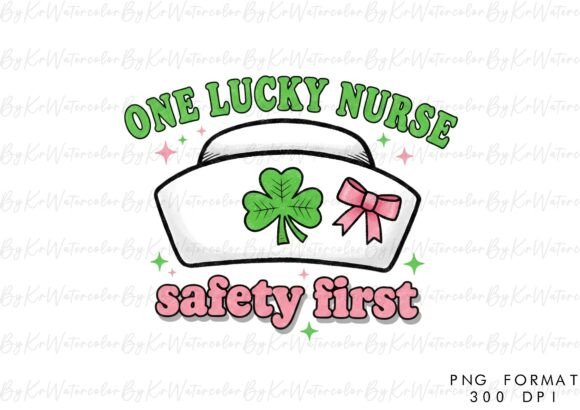
Lucky Nurse Safety First Hand-drawn PNG
If you're designing nurse-themed merchandise, classroom resources, healthcare awareness materials, or wellness-focused decor, the Lucky Nurse Safety First Hand-drawn PNG is more than just a charming illustration—it’s a versatile, high-fidelity digital asset built for real-world use. With its clean hand-drawn aesthetic, thoughtful composition, and emphasis on safety symbolism (think gloves, shields, hearts, or subtle cross motifs), this design resonates across medical, educational, and empathetic contexts. And because it's delivered as a 300 DPI high-resolution PNG—fully transparent, watermark-free, and ready for immediate download—it’s engineered for clarity at any scale: whether printed on a toddler’s onesie, embossed on a greeting card, or layered into a social media campaign.
Why resolution and format matter more than you think
Many buyers assume “PNG” automatically means “print-ready.” That’s not always true. Some PNGs are saved at 72 DPI—the standard for web screens—but they’ll pixelate badly when scaled for mugs, posters, or sublimation blanks. The Lucky Nurse Safety First Hand-drawn PNG avoids that pitfall entirely: its native 300 DPI resolution ensures crisp edges and smooth gradients even at 12×16 inches. That’s essential if you’re using it for print-on-demand services like Redbubble, Printful, or Etsy-integrated platforms—where pixelation leads to rejected uploads, rework delays, or disappointed customers.
A common oversight? Assuming transparency works the same in every software. While the file includes an alpha channel (so background stays invisible), some older versions of Canva or basic photo editors may flatten transparency unless you open it in “PNG mode” or disable automatic background fills. Always preview your file in the actual program you’ll use—before committing to a full product mockup.
Mistake #1: Using it without checking color mode or intended context
This illustration was created with warm, approachable tones—soft watercolor textures, gentle outlines, and balanced contrast—not clinical sterility. That’s intentional. But if you’re designing for a hospital compliance poster or a CDC-aligned training module, that warmth may unintentionally undercut authority. Conversely, using it in a pediatric clinic waiting room or a nursing student’s study journal? It lands perfectly: friendly, reassuring, human-centered.
Before downloading, ask yourself: Who sees this first—the patient, the buyer, the teacher, or the end consumer? If your goal is trust + approachability (e.g., mental health stickers, nurse appreciation cards, nursery wall art), this design supports that instinctively. If you need strict regulatory alignment (e.g., OSHA signage or infection control infographics), pair it with clear typography and verified guidelines—not rely on the art alone.
Mistake #2: Overlooking licensing scope—and assuming “digital download” means unlimited rights
This is a digital instant download, not a physical item—and that distinction shapes how you can apply it. You’re free to use the Lucky Nurse Safety First Hand-drawn PNG across shirts, mugs, stickers, website headers, social posts, junk journals, and even small-batch sublimation products. But it’s licensed for personal *and* commercial use—not for resale as a standalone digital file (e.g., bundling it into your own clipart pack and selling it on Creative Market). Nor does it grant trademark rights: you can’t name your business “Lucky Nurse Safety Co.” and claim affiliation.
Real example: A freelance educator bought this file to create printable “Safety First” flashcards for her nursing students. She used it correctly—embedded in original PDFs she designed herself, sold via her own Gumroad store. Another creator tried uploading the raw PNG to a POD site labeled “Nurse Clipart Bundle”—and got flagged for unauthorized redistribution. The fix? Create derivative work: trace elements, combine with original text/layouts, add value through curation or instruction.
Mistake #3: Skipping the “test print” step—even once
Because this file is optimized for both digital and print, it’s tempting to skip verification. Don’t. Ink behavior varies wildly: a soft watercolor blush might deepen on matte paper but fade slightly on glossy stock. And RGB screen previews don’t match CMYK press output. If you’re ordering bulk prints (e.g., 50+ greeting cards or nursery posters), order a single test copy first—especially if using third-party printers like Vistaprint or local print shops.
Better approach: Open the file in Adobe Photoshop or Affinity Photo, convert to CMYK if needed, and soft-proof using your printer’s ICC profile. Even simpler? Export a low-res JPG preview and email it to your printer ahead of time—they’ll often flag potential contrast or saturation issues before you pay.
What to verify before downloading—or sharing with your team
- File type & specs: Confirm it’s a PNG (not JPEG or SVG) with transparent background and 300 DPI embedded metadata—not upscaled from a lower-res source.
- Usage rights: Re-read the license summary. Does it explicitly allow your intended use case? (e.g., “small business merch,” “classroom handouts,” “social media graphics”)
- Compatibility: Try opening it in your primary tool—Canva, Cricut Design Space, Silhouette Studio, or Illustrator—before building a full layout. Some platforms auto-convert transparency; others require manual layer locking.
- Scale integrity: Zoom to 400% in your viewer. Do lines stay sharp? Do watercolor textures retain grain without jagged edges? If yes—you’ve got a production-ready asset.
It’s not just decoration—it’s communication with intention
The Lucky Nurse Safety First Hand-drawn PNG succeeds because it balances visual warmth with professional relevance. That duality is rare—and easy to misuse if treated as generic “nurse clipart.” When applied thoughtfully—as part of a cohesive brand voice, aligned with audience needs, and technically validated for its medium—it elevates everything from a handmade thank-you card to a school-wide wellness campaign.
So before you click “add to cart”: pause. Ask what job this image needs to do. Then download, test, adapt—and let the craftsmanship speak for itself.