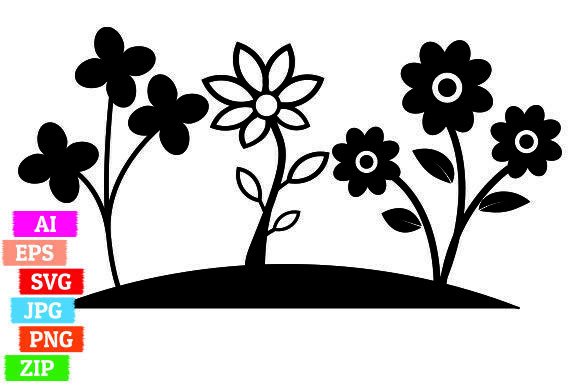
Simple Floral Line Art: A Practical Guide for Designers and DIY Creators
Simple Floral Line Art refers to minimalist botanical illustrations rendered in clean, single-weight lines—often monochrome—with no shading, gradients, or fill color. These designs emphasize contour, rhythm, and negative space, capturing the essence of flowers, leaves, and stems through economy of form. Unlike detailed botanical drawings or stylized watercolor florals, Simple Floral Line Art prioritizes clarity and scalability over realism or texture. Its visual language is rooted in modern graphic design principles: legibility at small sizes, adaptability across mediums, and ease of editing.
How It Stands Apart From Other Floral Design Approaches
Compared to hand-drawn ink florals or scanned sketchbook pages, Simple Floral Line Art is intentionally digitized from the outset—optimized for vector fidelity and pixel-perfect rendering. That distinction matters when scaling for embroidery patterns, laser-cutting templates, or large-format wall decals. While a scanned pencil sketch may carry expressive charm, it often introduces inconsistencies in line weight, stray marks, or resolution limits that hinder precision use. Simple Floral Line Art avoids those pitfalls by starting with intentional digital construction.
It also differs meaningfully from AI-generated floral motifs. Many AI tools produce dense, ornate, or contextually ambiguous arrangements—sometimes blending species unrealistically or adding unintended decorative elements. In contrast, Simple Floral Line Art tends to be curated, consistent, and purpose-built: each stem, petal, and leaf is placed deliberately, with spacing and proportion calibrated for balance and repetition. This makes it especially suitable for pattern-making, branding elements, or craft projects where predictability matters.
Format Flexibility: Why Multiple File Types Matter
The value of Simple Floral Line Art isn’t just aesthetic—it’s functional. When you receive this design in multiple formats—Editable AI file, Editable SVG File, PNG File, Editable EPS File, and Transparent PNG printable—you’re not getting redundancy. You’re receiving strategic versatility.
- AI and EPS files preserve full vector editability: adjust anchor points, change stroke width, recolor individual elements, or isolate components for custom layouts—all without quality loss.
- SVG files are ideal for web use: lightweight, responsive, and compatible with CSS styling or JavaScript interactivity. They scale cleanly on any screen and embed directly into HTML.
- PNG files (especially the transparent version) serve immediate print-and-cut needs: apply to greeting cards, vinyl decals, or sublimation transfers without background cleanup. The transparency eliminates manual masking—a time-saver for crafters using cutting machines like Cricut or Silhouette.
- ZIP compression keeps everything organized. No hunting across email attachments or cloud folders—just one folder to download, extract (or double-click to open on most systems), and begin using.
This multi-format approach reflects how real-world usage varies. A graphic designer building a brand identity might start in Illustrator with the AI file, then export SVG for a website footer. A teacher preparing classroom decor may print the transparent PNG directly onto sticker paper. A small-batch ceramicist could import the EPS into their laser engraving software to etch floral motifs onto tiles. Each format supports a different workflow—not a marketing upsell, but a practical response to diverse needs.
Where Simple Floral Line Art Excels—and Where It May Fall Short
Simple Floral Line Art shines in contexts where clarity, consistency, and customization are priorities. Think wedding stationery with repeatable border elements, minimalist packaging labels, educational flashcards for plant identification, or subtle textile repeats for napkins or scarves. Its restrained style pairs well with modern typography, neutral palettes, and uncluttered layouts. Because it avoids heavy detail, it remains legible even at 8 mm height on a business card or embroidered on a cufflink.
That same restraint, however, means it’s less suited for applications demanding richness or narrative depth. If your project calls for seasonal variation (e.g., cherry blossoms in spring vs. dried hydrangeas in autumn), botanical accuracy (correct stamen count or leaf venation), or atmospheric mood (misty garden scenes, rain-dappled petals), Simple Floral Line Art won’t deliver those layers. Similarly, if you need photorealistic textures—velvety rose petals, dewy fern fronds, or cracked soil around roots—you’ll need raster-based illustration or photography instead.
Another consideration is cultural or symbolic nuance. Some floral motifs carry specific meanings across regions or traditions (e.g., chrysanthemums in Japan vs. Europe, lotus symbolism in South and Southeast Asia). Simple Floral Line Art typically presents generic forms—not botanically labeled or culturally annotated. Users integrating these into culturally sensitive contexts should verify appropriateness separately.
Practical Use Cases Across Audiences
For small business owners, Simple Floral Line Art offers reusable branding assets: a single dahlia outline can become a logo, a social media icon, a product label, and an Instagram story highlight icon—all from the same source file. No need to commission separate versions for each application.
Educators and homeschoolers find it useful for creating tactile learning tools: cut-out matching games, tracing sheets for fine motor development, or layered anatomy diagrams (e.g., overlaying root, stem, and flower outlines). The clean lines reduce visual noise, helping learners focus on structure rather than decoration.
Crafters and makers benefit from the transparent PNG and vector files when working with cutting machines, heat-transfer vinyl, or embroidery software. Unlike complex raster images, Simple Floral Line Art imports cleanly, requires minimal cleanup, and scales without jagged edges—even when resized to fit a 2-inch coaster or a 36-inch banner.
Print-on-demand creators appreciate how easily these files integrate into mockup templates. A single SVG of a trailing ivy motif can wrap around mugs, stretch across tote bags, or tile seamlessly on notebook covers—without licensing concerns common with stock photo florals.
Making the Right Choice for Your Project
Ask yourself three questions before selecting Simple Floral Line Art:
- Do I need scalability and precision? If your design will appear across multiple sizes or production methods (print, web, embroidery, laser), vector-based line art provides reliable fidelity.
- Is visual simplicity aligned with my message or audience? Minimalist aesthetics resonate strongly in wellness branding, academic publishing, Scandinavian-inspired interiors, or tech-adjacent creative fields—but may feel too sparse for luxury beauty or heritage crafts where opulence signals value.
- Do I have—or plan to develop—the ability to edit vector files? While transparent PNGs require no special software, unlocking the full potential (re-coloring, reshaping, combining elements) benefits from familiarity with Illustrator, Affinity Designer, or Inkscape. If you're new to vectors, many free tutorials exist—but factor in that learning curve.
If the answer to all three is yes, Simple Floral Line Art is likely a strong match. If not, consider alternatives: high-resolution botanical photographs for editorial work, hand-lettered floral quotes for personal stationery, or textured brushstroke illustrations for artisan packaging.
Ultimately, Simple Floral Line Art isn’t about choosing the “most beautiful” floral image—it’s about selecting the most functional, adaptable, and editable foundation for what you actually need to build. Its strength lies not in what it adds, but in what it leaves out: clutter, ambiguity, and unnecessary complexity. That restraint, when matched to the right use case, becomes its greatest utility.