Watercolor Happy Easter Clipart: A Practical Resource for Creative Execution
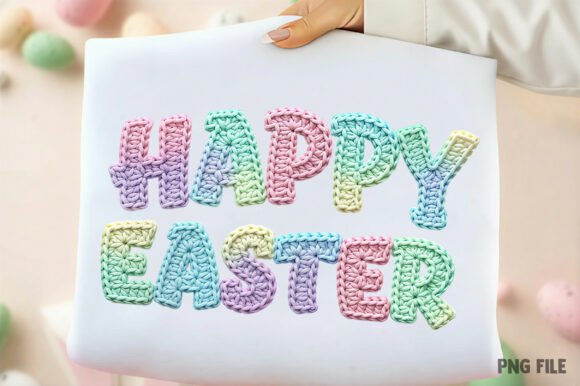
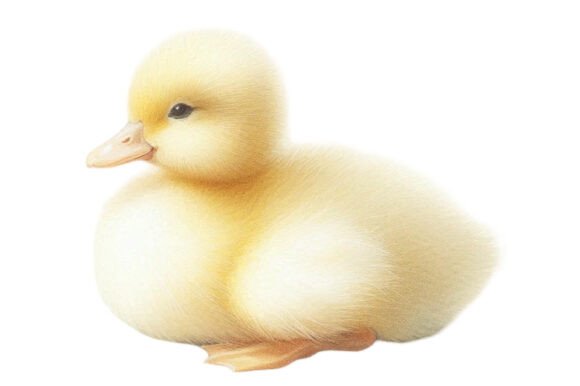
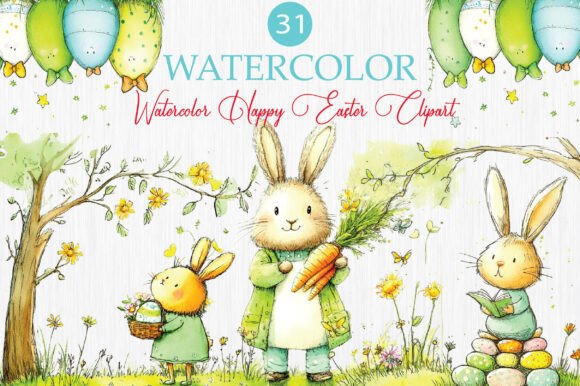
Watercolor Happy Easter Clipart isn’t just decorative—it’s a functional asset designed to accelerate execution across multiple creative and commercial workflows. This 31-piece set delivers high-resolution, transparent-background PNGs—each rendered in a soft, hand-painted watercolor style—with bunnies, Easter eggs, carrots, baskets, and gentle spring motifs. Its value lies not in isolation, but in how seamlessly it integrates into real-world planning, production, and delivery cycles.
Where It Fits in the Creative Process
Most design or content projects follow a predictable arc: ideation → planning → asset assembly → composition → refinement → output. Watercolor Happy Easter Clipart enters most effectively at the asset assembly stage—but its utility extends both backward and forward in that chain.
During ideation, browsing the set helps refine visual direction. Seeing the muted palette, organic edges, and storybook charm of the bunnies and eggs signals whether the tone aligns with your audience—especially for nurseries, early-learning materials, or gentle branding. That visual clarity reduces revision loops later.
In planning, you’ll assess scope: Do you need full-scene illustrations, or modular elements? This set leans toward modularity—individual bunnies, standalone eggs, isolated carrots—so it supports flexible layout decisions. You’re not locked into precomposed scenes; you’re given building blocks that scale with your needs.
Integration Across Platforms and Tools
Compatibility is built into the file specifications: 300 DPI resolution and transparent backgrounds mean these PNGs drop cleanly into Canva, Adobe Photoshop, Illustrator, Affinity Designer, Cricut Design Space, Silhouette Studio, and even Google Slides or Microsoft PowerPoint. No clipping masks or background removal needed—saving minutes per asset, hours across a project.
For print-on-demand creators, the transparency and resolution support direct upload to platforms like Printful, Redbubble, or Teespring without resizing or quality loss. Sublimation users benefit from the soft edges and low-contrast gradients—these translate well onto mugs, onesies, and tote bags without harsh halos or pixelation.
Bloggers and educators embedding visuals into WordPress or Notion can use the files as-is: no attribution required under the small commercial license, and no risk of copyright flags. That reliability removes friction when publishing seasonal content on tight deadlines.
Workflow Examples in Practice
Educators building spring lesson kits: A kindergarten teacher preparing an Easter-themed phonics unit downloads the set, imports three bunny PNGs into a Canva template, layers them over custom text (“B is for Bunny”), and exports as PDF for printing. Later, she reuses the same bunny in a digital drag-and-drop activity in Google Slides—no extra sourcing, no licensing checks.
Nursery designers updating wall art: A freelance interior stylist sketches a gallery wall layout in Procreate, then drags in six Watercolor Happy Easter Clipart elements—two eggs, a basket, three bunnies—at varying sizes. Because all files share the same watercolor texture and color harmony, cohesion happens automatically. No color correction or style matching needed.
Small business owners launching seasonal products: A candle maker uses one egg and one carrot PNG to mock up new “Carrot Cake” and “Spring Egg” scent labels in Adobe Illustrator. She duplicates the elements across packaging variants (jar, tin, box), adjusts only text and barcodes, and sends straight to her printer—knowing the 300 DPI output meets label spec requirements.
Preparation and Organization Tips
Before importing, rename files meaningfully—not “clipart_17.png”, but “bunny-sitting-softblue.png” or “easter-basket-tilted.png”. This pays off when managing dozens of assets across multiple Easter campaigns year after year.
Create a dedicated folder with subfolders: /source (original ZIP), /edited (resized or recolored versions), and /export (final JPG/PDF outputs). This structure prevents accidental reuse of low-res drafts and supports version control.
If you’re working with teams, share the license terms clearly: personal and small commercial use is permitted, but redistribution or resale of the PNGs *as standalone assets* is not allowed. That boundary protects both your usage rights and the creator’s IP—keeping collaboration compliant by default.
Quality Control and Long-Term Use
The consistent 300 DPI resolution means these files hold up across formats—whether scaled down for social media thumbnails or enlarged for 24×36″ nursery prints. But resolution alone doesn’t guarantee usability. What makes this set durable is its intentional restraint: no over-saturation, no heavy outlines, no competing textures. The watercolor grain is subtle enough to layer over photographs or textured backgrounds without visual noise.
Test one element across three contexts before committing to a full layout: place a bunny over a light pastel background, a midtone photo, and a dark charcoal texture. If it reads clearly in all three, the set’s contrast range and edge treatment are optimized for real-world versatility.
Over time, revisit your usage patterns. You may find certain elements—like the tilted basket or the carrot with leaf cluster—appear repeatedly across projects. Flag those as “core assets” and keep optimized versions (e.g., flattened layers, saved as SVG if traced) for faster reuse. That kind of curation turns a static clipart set into a living part of your creative infrastructure.
Efficiency Gains You Can Measure
Time saved isn’t theoretical. One user reported cutting Easter planner design time by 40% after switching from stock-photo composites to this set—because every element aligned tonally and technically from the start. Another scrapbooker estimated she reused the same five bunny poses across eight different paper collections over two years, eliminating the need to search, vet, and license new assets each season.
That consistency also supports brand continuity. If your nursery blog, printable shop, and Instagram grid all use the same watercolor bunny pose and palette, recognition builds quietly—without needing logos or slogans.
What to Pair It With (and What to Skip)
This set works best alongside tools that support layer-based editing and batch export—like Canva Teams, Adobe Express, or Affinity Publisher. It pairs naturally with serif fonts (e.g., Playfair Display for headings) and soft sans-serifs (e.g., Quicksand for body text) to maintain the gentle, approachable tone.
Avoid pairing it with ultra-bold, metallic, or neon-heavy design systems—the watercolor aesthetic will visually recede or clash. Likewise, don’t try to force photorealistic shadows or complex gradients onto these elements; their strength is in simplicity and texture, not hyper-detail.
For extended seasonal work, consider complementing it with coordinating resources: a minimalist Easter font bundle, a set of watercolor texture overlays, or a collection of editable SVG Easter icons for web use. But start with what’s here—31 thoughtfully crafted, production-ready pieces that solve specific, repeatable problems.
Watercolor Happy Easter Clipart succeeds because it assumes you’re already in motion—planning a party, designing a product, teaching a lesson, or launching a campaign. It doesn’t ask for attention. It delivers precision, compatibility, and quiet reliability—exactly what professionals need when execution matters more than ornamentation.