Colorful Silhouettes of Diverse People: A Powerful Visual Tool for Inclusion and Creative Expression
In today’s visually driven world—where social media feeds, educational materials, marketing campaigns, and digital interfaces compete for attention—how we represent people matters more than ever. One increasingly popular and impactful visual asset is the colorful silhouettes of diverse people. These aren’t just decorative graphics; they’re intentional, inclusive design choices that communicate values like diversity, equity, and belonging at a glance. Whether you're a designer, educator, marketer, or content creator, understanding the purpose, versatility, and thoughtful application of these assets can elevate your work—and your message.
What Exactly Are Colorful Silhouettes of Diverse People?
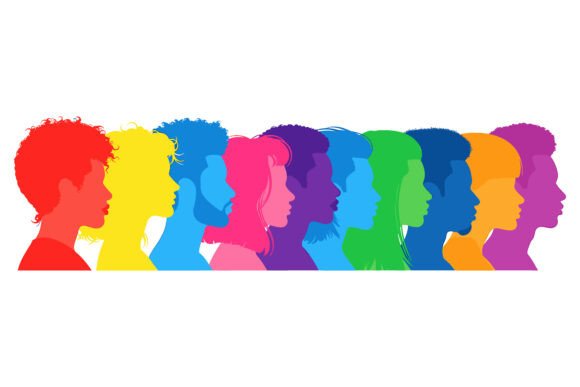
At their core, colorful silhouettes of diverse people are stylized, flat-profile head or full-body outlines—typically rendered against a clean white background—that emphasize variation in hairstyles, skin tones (represented through vibrant hues), facial features, and cultural expression. Unlike traditional black-and-white silhouettes, these use a rainbow palette: cobalt blues, warm terracottas, sunlit yellows, deep emeralds, and magentas—each color representing individuality without relying on literal skin-tone realism.
These assets commonly come in two formats: an EPS file (scalable vector format ideal for print, logos, and large-format displays) and a JPG file (high-resolution raster format perfect for web use, presentations, and social posts). Their flat, minimalist style ensures clarity across devices and accessibility-friendly contrast levels—making them both aesthetically modern and functionally robust.
Why Do They Matter? The Significance Beyond Aesthetics
Visual representation shapes perception—often unconsciously. Research in psychology and education shows that seeing oneself reflected in media strengthens engagement, trust, and psychological safety. When a website, classroom slide, or corporate brochure features only one body type, gender presentation, or hair texture, it sends subtle but powerful signals about who “belongs.”
Colorful silhouettes of diverse people counteract this by offering a symbolic yet inclusive alternative. They avoid stereotyping while celebrating difference—not through photorealism (which can inadvertently highlight bias in image selection), but through intentional abstraction. A curly afro silhouette in tangerine, a hijab-wrapped profile in indigo, a buzz-cut head in lime green—each communicates respect for identity without reducing people to labels.
This approach aligns with global best practices in inclusive design, supporting principles of universal access and equitable communication. It’s no coincidence that organizations advancing DEIB (Diversity, Equity, Inclusion, and Belonging) initiatives frequently adopt such assets in internal training, public-facing websites, and recruitment materials.
Real-World Applications Across Industries
- Educational Resources: Teachers use colorful head silhouettes in lesson plans about community, identity, or social-emotional learning. Students can cut, color, and arrange them to explore self-expression—turning abstract concepts like “diversity” into tactile, collaborative experiences.
- Digital Marketing & Web Design: Brands integrate these silhouettes into hero banners, infographics, and landing pages to signal inclusivity without stock-photo clichés. Because they’re vector-based (EPS), they scale flawlessly from mobile buttons to billboard mockups.
- Corporate Training & HR Materials: HR departments embed them in onboarding decks and policy handbooks to reinforce organizational values. Their white background and clean profile view ensure readability alongside text—no visual competition, just quiet affirmation.
- Creative Media & Motion Graphics: Animators layer multiple silhouettes with subtle movement—swaying, rotating, or transitioning between colors—to evoke cinematic rhythm and human connection. The flat style lends itself naturally to SVG animation and interactive web elements.
Dispelling Common Misconceptions
Some assume that using stylized silhouettes is “less authentic” than photography—or worse, a superficial substitute for real representation. That’s a misunderstanding. Authenticity isn’t defined solely by realism—it’s rooted in intentionality and consistency. A single photo may capture one person’s truth; a thoughtfully curated set of silhouettes affirms a broader spectrum of humanity without tokenism.
Others wonder: “Why not use real photos?” Valid question—but practical constraints exist. Licensing high-quality, rights-cleared, diverse photo libraries is expensive and time-consuming. Photos also age quickly, carry implicit context (clothing, setting, expression), and may raise privacy concerns—especially in sensitive environments like healthcare or education. Silhouettes sidestep those issues while retaining emotional resonance.
And while “rainbow” coloring might seem purely decorative, it serves a functional role: color coding supports visual scanning, aids memory retention, and enhances accessibility for users with low vision when paired with sufficient contrast. Each hue becomes a gentle cue—not a label, but a point of distinction and dignity.
How to Use These Assets Responsibly
Even powerful tools require thoughtful application. Here’s how to maximize impact—and avoid missteps:
- Context Is Key: Pair silhouettes with meaningful narratives. A rainbow of heads next to the headline “Our Team” carries weight; the same graphic floating alone on a homepage feels decorative, not declarative.
- Avoid Overgeneralization: Don’t imply that one silhouette “represents” an entire culture or experience. Instead, use them as part of a broader ecosystem of inclusive visuals—including photos, illustrations, and first-person storytelling.
- Respect File Integrity: Always use the EPS file for resizing or editing—never stretch or distort the JPG beyond its native resolution. Vector fidelity preserves the clean lines and crisp edges essential to the flat, modern aesthetic.
- Test for Accessibility: Ensure text overlays meet WCAG 2.1 contrast standards (4.5:1 minimum). The white background helps—but verify legibility across devices and lighting conditions.
The Bigger Picture: Design as Advocacy
Every visual choice reflects a worldview. Choosing colorful silhouettes of diverse people isn’t just about aesthetics—it’s a small but deliberate act of advocacy. It says: We see variety as strength. We value difference as design, not deviation. We build spaces where many profiles—literal and metaphorical—can coexist with clarity and joy.
As AI-generated imagery grows more sophisticated, the human intention behind design becomes even more vital. Tools like these remind us that technology serves people—not the other way around. Whether you’re launching a nonprofit campaign, redesigning a university syllabus, or crafting an app interface, these silhouettes offer a flexible, scalable, and deeply humane starting point.
So the next time you reach for a visual asset, ask yourself: Does it reflect the world as it is—or as it could be? With colorful people silhouettes, you’re not just selecting an image. You’re choosing a tone, a stance, and a shared horizon—one profile at a time.
Looking for high-quality, ethically sourced design assets? Explore collections featuring colorful silhouettes of diverse people, available in both EPS and JPG formats—with attention to cultural nuance, color theory, and inclusive design standards.