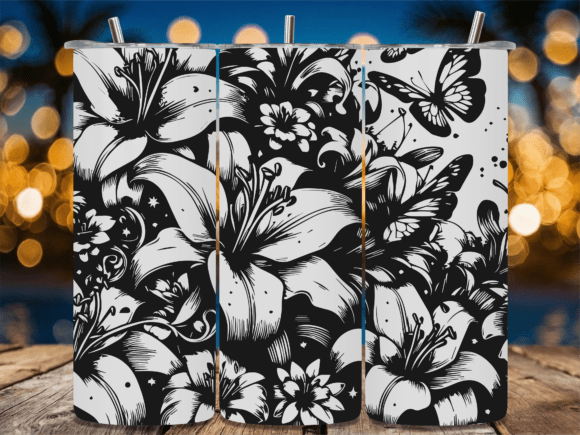
Lily Flower Bouquet
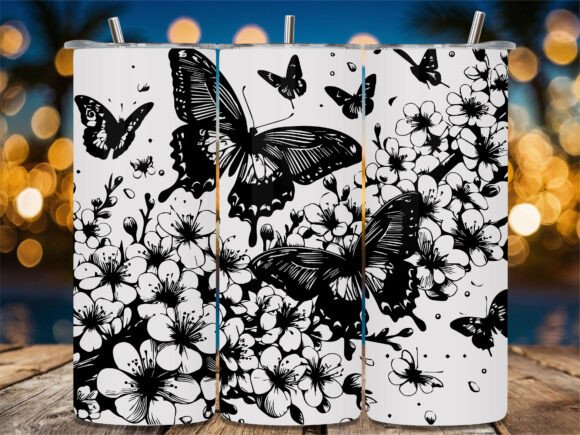
A Lily Flower Bouquet refers to a curated digital design file—typically vector-based—that features stylized lily blossoms arranged in a cohesive, wrap-around composition. Unlike physical floral arrangements, this version is intended for laser engraving on cylindrical drinkware, particularly Stanley-style tumblers. It is not a pre-engraved item or a printable sticker, but a scalable digital asset optimized for precision laser marking.
People exploring this design often do so with a specific purpose: to produce custom, professional-grade engraved tumblers for personal use, gifting, or small-batch retail. The appeal lies in combining botanical elegance with functional utility—lilies carry associations of purity, renewal, and refined simplicity, making them suitable for wellness brands, wedding favors, boutique cafes, or artisan gift shops.
Why Consider the Lily Flower Bouquet Design?
There are several practical reasons someone might choose this particular motif. First, lilies translate well to laser engraving due to their distinct petal shapes, layered structure, and moderate contrast between foreground and background elements. When rendered as a full-wrap tumbler file, the design avoids awkward seams or misaligned repeats—a common issue with poorly constructed wraps.
Second, the inclusion of multiple file formats (SVG, EPS, PDF, and high-resolution PNG) supports compatibility across major laser control software (e.g., LightBurn, RDWorks, LaserGRBL) and vector editors (e.g., Adobe Illustrator, Inkscape). This flexibility reduces friction during setup, especially for users managing varied hardware setups or collaborating with production partners.
Third, the licensing terms allow commercial use of physical products made from the file—meaning creators can sell engraved tumblers without violating copyright, provided they do not redistribute the digital file itself. This distinction matters for makers operating under cottage-industry regulations or building micro-brands.
Benefits and Realistic Expectations
The primary benefit is consistency: a well-constructed Lily Flower Bouquet wrap ensures uniform line weight, balanced negative space, and proportional scaling across tumbler sizes (e.g., 20 oz, 30 oz, 40 oz Stanley variants). Because it’s designed specifically for cylindrical surfaces, distortion correction is typically baked in—reducing the need for manual warping or trial-and-error test runs.
However, results depend heavily on equipment calibration and material choice. Stainless steel tumblers require appropriate power/speed settings and often benefit from a ceramic or matte coating to enhance contrast. Engraving depth and finish (matte vs. satin) will vary by machine type (CO₂ vs. fiber laser), so users should verify compatibility before purchase. The file itself does not guarantee success—it enables it, assuming proper technical execution.
Also note that “sharp engraving results” refer to crisp vector paths—not photorealism. The design is line-art or silhouette-based, not a raster image meant for grayscale engraving. Users expecting tonal gradients or fine texture detail may find the output more graphic and minimalist than illustrative.
Situations Where This Design Is a Strong Fit
This Lily Flower Bouquet is especially appropriate when:
- You’re producing tumblers at scale and need repeatable, alignment-ready artwork that minimizes operator intervention per unit.
- Your brand identity emphasizes natural motifs, botanical minimalism, or feminine-coded aesthetics without relying on clichéd florals like roses or daisies.
- You already own or operate a compatible laser system and maintain baseline proficiency in importing, scaling, and positioning vector files.
- You prioritize clean intellectual property boundaries—i.e., you want clear usage rights for finished goods while avoiding subscription-based or attribution-required assets.
In these cases, the design serves as a reliable, off-the-shelf component rather than a starting point requiring extensive modification.
When Alternatives May Be Worth Considering
If your workflow relies heavily on raster engraving (e.g., photo etching or shaded botanicals), a vector-based Lily Flower Bouquet may not match your output goals. Similarly, if you lack access to laser equipment and plan to outsource engraving, confirm with your vendor whether they accept third-party vector wraps—and whether they charge extra for setup or alignment adjustments.
For beginners unfamiliar with laser parameters or vector editing, simpler single-motif files (e.g., a standalone lily icon) may offer gentler learning curves. Full-wrap designs demand attention to seam placement, rotation offset, and circumference matching—details that become critical when engraving curved surfaces.
Additionally, if your project requires multilingual text integration, color fills, or layered effects (e.g., engraved outline + painted fill), this file alone won’t suffice. You’d need to combine it with supplementary assets or modify it using vector software—adding time and technical overhead.
Making an Informed Decision
To determine whether this Lily Flower Bouquet aligns with your needs, ask yourself three questions:
- What is my end goal? If you aim to create a limited-run product with consistent visual identity and efficient production, the wrap format supports that. If you’re experimenting or prioritizing artistic variation over repeatability, a modular or editable design may suit you better.
- What tools and knowledge do I have? Basic familiarity with scaling vectors, setting origin points, and adjusting laser passes is recommended. If those concepts are unfamiliar, allocate time for practice runs—or consider purchasing alongside a short tutorial or vendor support.
- How much customization do I anticipate? The file is resizable and format-flexible, but altering layout (e.g., repositioning blooms, adding stems) requires vector editing skills. Assess whether built-in adaptability meets your scope—or whether you’ll need supplemental design work.
Finally, remember that digital files like this one function as inputs—not solutions. Their value emerges through application: in the clarity of an engraved line, the cohesion of a branded collection, or the efficiency gained by eliminating redundant design steps. Evaluating them alongside your actual hardware, timeline, and skill level—not just aesthetic preference—leads to more sustainable, scalable outcomes.