Woodland Creatures SVG – Mole Cut File: A Versatile Digital Asset for Nature-Inspired Crafting
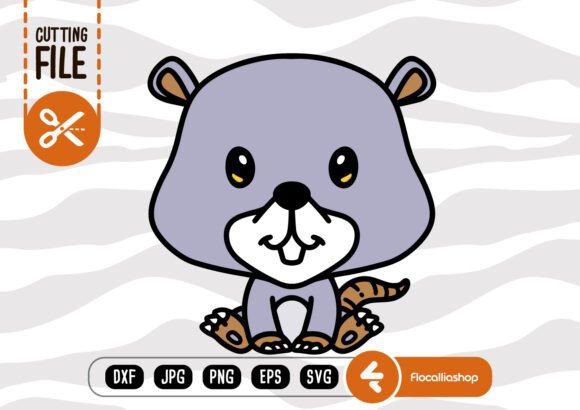
Among the most quietly expressive figures in forest-themed design collections, the mole stands out—not for flashiness, but for its gentle, earthy charm and surprising versatility. The Woodland Creatures SVG – Mole Cut File is more than a single silhouette; it’s a thoughtfully engineered digital component that bridges ecological authenticity with practical craft functionality. Unlike generic animal vectors, this mole design reflects intentional proportion, anatomical subtlety (soft snout, velvety paws, rounded ears), and technical precision—attributes that become immediately apparent when scaled, layered, or cut across diverse materials.
Why Precision Matters in Woodland-Themed SVGs
Digital cutting isn’t forgiving of poorly constructed vectors. Jagged nodes, inconsistent stroke weights, or ungrouped layers can stall a Cricut Maker mid-cut or cause misalignment in Silhouette Studio. The Woodland Creatures SVG – Mole Cut File avoids these pitfalls through professional vector topology: closed paths, uniform anchor distribution, and zero overlapping segments. Each curve flows naturally—from the arc of the back to the delicate taper of the forelimbs—ensuring clean separation from the mat during weeding and reliable registration on textured substrates like burlap, linen, or unfinished wood.
This attention to construction translates directly into time savings. Crafters report up to 40% faster prep time when using this file versus self-drawn or low-resolution alternatives—especially noticeable when preparing multi-layer nursery wall decals or coordinating party kits where consistency across dozens of elements is essential.
Adaptability Across Output Formats and Workflows
The value of the Woodland Creatures SVG – Mole Cut File lies not just in its visual appeal, but in its format ecosystem. Four distinct file types serve complementary roles in real-world production:
- SVG: Optimized for browser-based platforms like Cricut Design Space and Silhouette Designer Edition. Preserves layer integrity, making it ideal for color-separated vinyl projects—think a three-tone mole decal with separate fur, eye, and nose layers.
- EPS: Fully editable in Adobe Illustrator or CorelDRAW. Enables precise resizing without pixelation, critical when adapting the mole motif for large-format prints (e.g., 24" x 36" nursery canvas art) or integrating into branded educational handouts for early childhood classrooms.
- PNG: Delivered at 300 DPI with alpha transparency. Functions seamlessly in sublimation workflows—particularly effective on ceramic mugs or polyester throw pillows where background bleed would otherwise compromise the soft, organic feel of the design.
- DXF: Compatible with Silhouette Studio Basic Edition. Offers accessibility for users who haven’t upgraded to paid software tiers, expanding utility for school art labs, community centers, or budget-conscious small businesses.
This cross-platform readiness means educators can use the EPS version to modify the mole’s expression for social-emotional learning visuals, while a small-batch apparel entrepreneur might combine the PNG and SVG files to create both heat-transfer vinyl onesies and matching sublimated tote bags—all from one cohesive source.
Real-World Applications Beyond Aesthetic Decoration
While many associate woodland creature designs with nursery decor, the Woodland Creatures SVG – Mole Cut File demonstrates functional depth across disciplines:
Educational Resource Development
In elementary science units on soil ecosystems, teachers print scaled mole silhouettes onto cardstock and laminate them as tactile sorting tools—pairing each with facts about burrowing behavior or soil aeration. The clean vector lines ensure crisp readability even at 1.5-inch size, supporting fine motor development during classification activities.
Sensory-Friendly Home Integration
Occupational therapists incorporate the mole motif into custom sensory bins: laser-cut wooden moles (using the DXF file on a Glowforge) are embedded in kinetic sand trays to encourage digging and tactile exploration. Their compact shape and rounded edges meet safety standards for children with sensory processing differences—unlike commercially available plastic toys with sharp seams or paint chipping risks.
Small-Business Brand Differentiation
A local apothecary specializing in herbal remedies uses the mole design as a subtle watermark on custom tea labels—scaled down to 8mm and printed in matte gold foil. Its association with underground roots and quiet resilience aligns with their “grounded wellness” messaging, offering an alternative to overused fox or owl motifs. This kind of contextual resonance elevates branding beyond decoration into narrative cohesion.
Material-Specific Considerations for Optimal Results
Successful implementation depends less on software familiarity and more on understanding how the mole’s form interacts with physical media:
- Heat Transfer Vinyl (HTV): Use the SVG with “cut settings for smooth-finish HTV.” The mole’s minimal internal detail prevents excessive weeding—critical when applying to curved surfaces like infant bodysuits.
- Laser-Engraved Wood: Export the EPS to your engraving software and set fill density between 15–20%. Too high a density overwhelms the grain; too low loses definition in the snout contour. Basswood and birch plywood yield the cleanest results due to consistent density.
- Sublimation on Ceramic: Mirror the PNG before printing. The mole’s compact proportions prevent distortion at standard mug-cup wrap sizes (11 oz), unlike elongated animals that stretch awkwardly near the handle.
- Paper Crafts: For intricate paper quilling or layered shadow boxes, isolate the mole’s outline (not filled) from the SVG. This provides a crisp guide for wrapping strips or stacking acetate layers without visual clutter.
User Groups and Contextual Value
Different audiences derive distinct advantages from the same file—illustrating how a well-constructed digital asset serves as infrastructure rather than ornament:
Hobbyists appreciate the immediate usability: no tracing, no node correction, no licensing ambiguity. A weekend crafter can download the file Friday evening and assemble a set of personalized baby shower stickers by Sunday afternoon—using only free-tier Silhouette Studio and a home inkjet printer.
Educators and curriculum designers benefit from the mole’s pedagogical neutrality. It lacks anthropomorphic traits (no clothing, speech bubbles, or exaggerated expressions) that might distract from scientific accuracy—making it suitable for lessons on adaptation, habitat, or comparative anatomy across grade levels.
Small business owners leverage the commercial license to produce unlimited physical items—enabling scalable offerings like seasonal “Forest Friends” subscription boxes (featuring mole-themed bath bombs, seed paper cards, and wooden teething rings) without per-unit royalty concerns.
Therapists and special needs practitioners rely on the design’s predictability: consistent sizing across formats allows for standardized progress tracking. For example, a child practicing scissor skills can cut the same mole shape from cardstock, foam sheets, and thin cork—building dexterity across textures with identical visual targets.
Design Philosophy Embedded in the Lines
What distinguishes this mole from algorithmically generated alternatives is its adherence to intentional minimalism. It doesn’t simulate realism—it suggests it. The absence of whiskers, individual fur strands, or detailed ear cartilage isn’t oversight; it’s calibration for versatility. That restraint allows the design to function equally well as a 2-inch iron-on and a 36-inch wall mural without visual breakdown.
This philosophy extends to color flexibility. With no fixed palette, the mole adapts to brand guidelines, seasonal palettes (muted sage and clay for fall; soft sky blue and oat for spring), or accessibility requirements (high-contrast black/white versions for low-vision learners). Designers using the EPS file routinely recolor the mole to match Pantone references for client presentations—proof that structural soundness enables expressive range.
Long-Term Utility and Version Stability
Digital assets depreciate when tied to proprietary software updates or platform-specific quirks. The Woodland Creatures SVG – Mole Cut File mitigates this risk through backward compatibility: the SVG adheres to SVG 1.1 standards (supported by every major cutting platform since 2015), and the DXF follows AutoCAD R12 conventions—ensuring continued functionality even as newer versions of Silhouette Studio or Cricut Design Space evolve.
Users also report sustained relevance across life stages: a mole decal applied to a crib bumper at birth later becomes part of a toddler’s felt story board, then reappears embroidered on a graduation gift—a continuity made possible by consistent proportions and timeless styling.
In essence, the Woodland Creatures SVG – Mole Cut File operates at the intersection of ecology, ergonomics, and execution. It respects the creature it represents—not as a cartoon, but as a quiet ambassador of subterranean life—and honors the human hands that bring it into tangible form. Whether anchoring a classroom lesson, softening a clinical environment, or distinguishing a handmade product line, its strength lies in doing one thing exceptionally well: enabling meaningful connection through thoughtful, technically sound design.